
Faculty of Agricultural Engineering and Technology
No Dean found for this faculty.
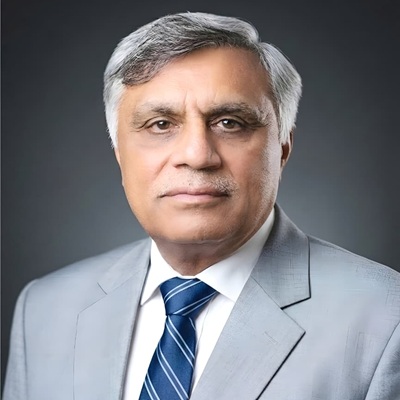
Dr. Qamar-uz-Zaman
Incharge
About Department
- Vision
- Mission
- PEO’s of B.sc Agricultural Engineering
- Program Learning Outcomes (PLO's)
The vision of Pir Mehr Ali Shah (PMAS) Arid Agriculture University Rawalpindi is to produce high quality agricultural scientists and to form an organized scientific infrastructure for teaching and research for the development of dry land regions of the country, thus minimizing the income gap between rich and poor.
The mission of the Faculty of Agricultural Engineering and Technology is to teach, train and produce high quality engineering graduates to solve problems in agriculture specially focus on dry land/rainfed regions through research, development and adoption of precise engineering technologies and automation to improve the livelihood of farming community.
PROGRAMME EDUCATIONAL OBJECTIVE- 1 (PEO-1)
To equip the graduates with engineering knowledge and skills required for analysis and investigation of engineering problems related to agriculture specially focus on dry land/rainfed regions.
PROGRAMME EDUCATIONAL OBJECTIVE- 2 (PEO-2)
The graduates capable of using modern engineering and IT tools for design and development of solutions for automation and precision to improve the efficiency and efficacy in agriculture.
PROGRAMME EDUCATIONAL OBJECTIVE- 3 (PEO-3)
The graduates having ethical, professional and societal responsibilities and commitments to effectively communicate the engineering solutions to improve the livelihood of farming community.
PROGRAMME EDUCATIONAL OBJECTIVE- 4 (PEO-4)
Graduated alumni with management skills for successful planning and execution of research and development projects related to land, water, farm structures, environment, energy, mechanization and precision in agriculture in rainfed/dry land regions.
Program outcomes are the narrower statements that describe what students are expected to know and be able to do by the time of graduation. These relate to the knowledge, skills and attitude that the students acquire while progressing through the program. Specifically, it is to be demonstrated that the students have acquired the following graduate attributes (GAs):
PLO1 – ENGINEERING KNOWLEDGE
An ability to apply knowledge of mathematics, science, engineering fundamentals and an engineering specialization to the solution of complex engineering problems.
PLO2 – PROBLEM ANALYSIS
An ability to identify, formulate, search literature, and analyze complex engineering problems reaching substantiated conclusions using principles of mathematics, natural and engineering sciences.
PLO3 – DESIGN/DEVELOPMENT OF SOLUTIONS
An ability to design solutions for complex engineering problems and design systems, components or processes that meet specified needs with appropriate consideration for public health and safety, cultural, societal, and environmental considerations.
PLO4 – INVESTIGATION
An ability to investigate complex engineering problems in a methodical way including literature survey, design and conduct of experiments, analysis and interpretation of experimental data, and synthesis of information to derive firm conclusions.
PLO5 – MODERN TOOL USAGE
An ability to create, select and apply appropriate techniques, resources, and modern engineering and IT tools, including prediction and modeling, to complex engineering activities, with an understanding of the limitations.
PLO6 – THE ENGINEER AND SOCIETY
An ability to apply reasoning informed by contextual knowledge to assess societal, health, safety, legal and cultural issues and the consequent responsibilities relevant to professional engineering practice and solution to complex engineering problems.
PLO7 – ENVIRONMENT AND SUSTAINABILITY
An ability to understand the impact of professional engineering solutions in societal and environmental contexts and demonstrate knowledge of and need for sustainable development.
PLO8 – ETHICS
Apply ethical principles and commit to professional ethics and responsibilities and norms of engineering practice.
PLO9 – INDIVIDUAL AND TEAM WORK
An ability to work effectively, as an individual or in a team, on multifaceted and /or multidisciplinary settings.
PLO10 – COMMUNICATION
An ability to communicate effectively, orally as well as in writing, on complex engineering activities with the engineering community and with society at large, such as being able to comprehend and write effective reports and design documentation, make effective presentations, and give and receive clear instructions.
PLO11 – PROJECT MANAGEMENT
An ability to demonstrate management skills and apply engineering principles to one’s own work, as a member and/or leader in a team, to manage projects in a multidisciplinary environment.
PLO12 – LIFELONG LEARNING
An ability to recognize importance of, and pursue lifelong learning in the broader context of innovation and technological developments.
Departments


Degree Programs
B.Sc (Agricultural Engineering) 4 Years – Morning
F.Sc (Pre-Engineering/Pre-Medical) / ICS with at least 60% marks OR 3 Years Diploma in Auto & Farm Machinery/Civil/Mechanical/Auto & Diesel/ Automation/Machinery with at least 60% marks from a recognized Board. The merit for admission will be as 17:50:33 for Matric, F.Sc (1st Years)/DAE and entrance test marks respectively. For open merit and reserved quota seats, separate application form should be submitted Application form for nominated candidates of different quotas should be submitted alongwith nomination before closing date. Must have passed University Entrance Test
B.Sc (Hons.) (Applied Climate Change and Adaptation) 4 Years – Morning
F. Sc (Pre-Medical or Pre-Engineering) / ICS or equivalent qualification/ 3 Years Diploma with minimum 2nd division (at least 45% marks) is the pre-requisite for admission in BSc (Hons.) Applied Climate Change & Adaptation. For open merit and reserved quota seats, separate application form should be submitted. Foreign certificate/degree holders will need to produce equivalence certificate from IBCC to seek admission. Must have passed the University Entrance Test.
BS Electronics 4-Years – Morning
F. Sc (Pre-Medical or Pre-Engineering) / ICS or equivalent qualification with at least 45% marks. For open merit and reserved quota seats, separate application form should be submitted. Foreign certificate/degree holders will need to produce equivalence certificate from IBCC to seek admission. Must have passed the University Entrance Test.
